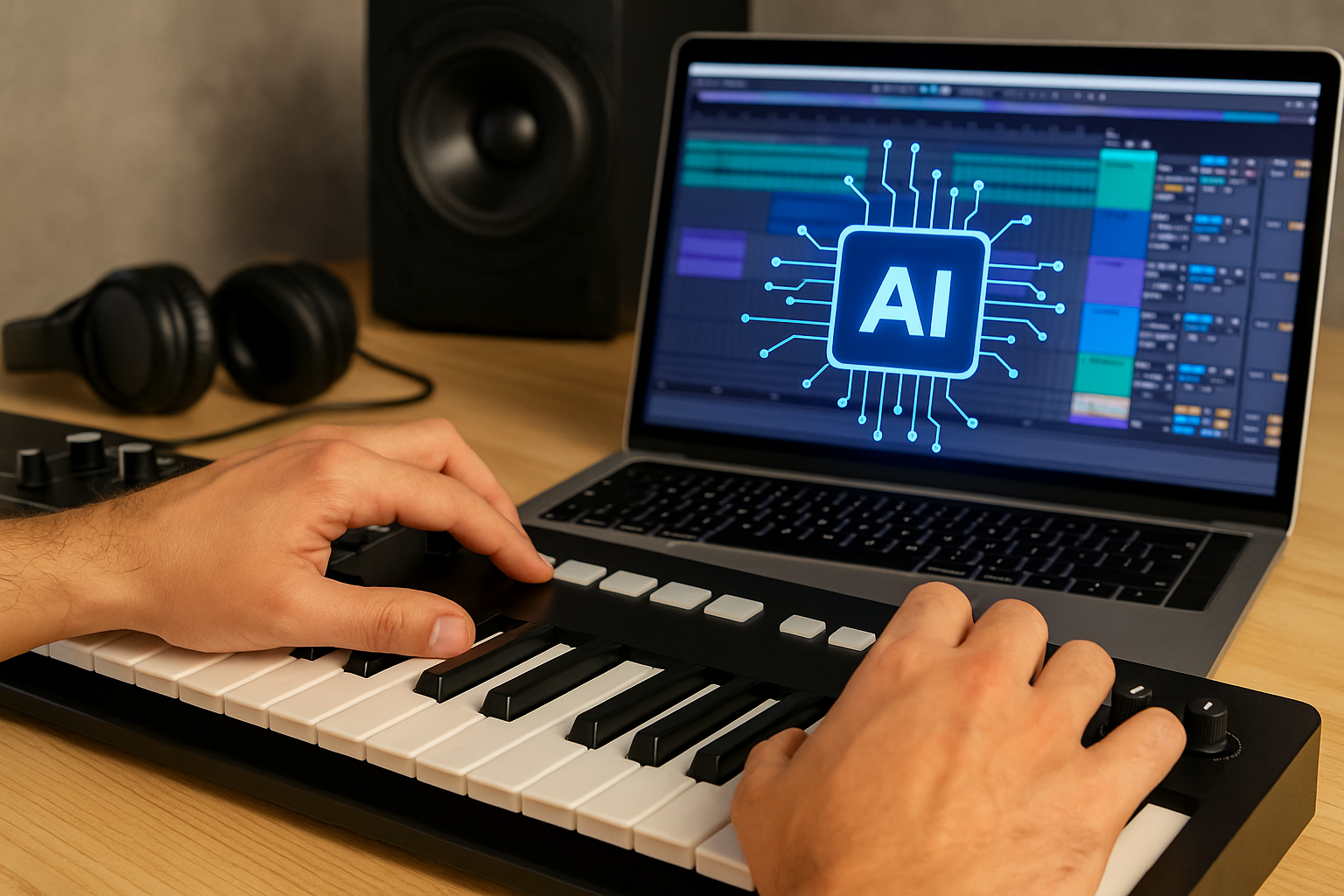
Artificial intelligence is reshaping music production in profound and often polarizing ways. What began with early tools like MIDI quantizers and sample-based loops has evolved into powerful AI systems capable of composing orchestral scores, mimicking vocalists, and generating full tracks with just a few text prompts. But whether these tools enhance creativity or undermine the core of human artistry remains hotly debated. So will AI in Music Production take out the real artists?
The Promise: Creativity Unleashed
AI offers significant advances in accessibility and creative potential. Tools such as generative music systems now allow anyone to create music—from simple melodies to complex arrangements—without formal training. By acting as creative partners, these systems can spark ideas, overcome writer’s block, or help craft arrangements. What once took hours or days can now be achieved in mere minutes, allowing musicians to focus on refinement and emotional direction rather than tedious drafting.
Academic research supports this impact. Studies have found that a high level of AI acceptance correlates with increased creative output among music practitioners. Moreover, the rise of AI has democratized music-making, enabling creators with limited resources to compose and produce at a near-professional level.
Veteran artist Björn Ulvaeus of ABBA encapsulates this sentiment. Speaking at a music industry conference, he described AI as “another songwriter in the room”—not capable of writing a full song independently, but useful for generating ideas and pushing creative boundaries.
The Pitfalls: Authenticity, Ownership, and Ethics
However, the industry’s embrace of AI comes with growing concerns. Critics argue that AI-generated music can feel emotionless, formulaic, or derivative. Without true emotional intent, AI lacks the nuanced context of human experience.
More alarmingly, AI has been used to produce songs that mimic the voices and styles of well-known artists. One viral example, a track that replicated the voices of two popular singers, triggered legal takedowns and widespread backlash.
These so-called musical “deepfakes” raise urgent ethical and legal questions. Which parts of an AI-generated track are original, and who owns them? Major record labels have begun filing lawsuits against AI startups, alleging copyright infringement for training models on copyrighted recordings.
Copyright offices in several countries currently refuse to recognize AI-generated works without meaningful human authorship. Ongoing lawsuits and policy discussions aim to strike a balance—promoting innovation without compromising creators’ rights.
Industry Response: Embrace, Reject, Regulate
Reactions vary widely. Some artists have embraced AI while advocating for transparent and ethical use. For instance, experimental musicians have developed AI-based assistants and pushed for fair training data practices.
Others have taken a harder line. Over 200 artists—including globally recognized names—have signed an open letter demanding platforms reject AI-generated music that infringes on copyright or artist likenesses. Some alternative platforms are also gaining attention for their pro-artist policies and stances on AI.
The Recording Academy, which oversees the Grammy Awards, has begun allowing limited AI usage in submitted works, while calling for ethical and creative standards. The Academy’s leadership emphasized that future regulations should protect human creativity while still allowing space for innovation.
Economic & Cultural Impacts
AI could significantly disrupt traditional economics in music. On one hand, it lowers production costs and stimulates content creation. On the other, it risks displacing session artists, composers, and engineers by automating parts of the workflow.
There’s also a cultural concern: mainstream AI systems tend to rely on large datasets that prioritize popular Western music, often leaving genres from less represented regions underacknowledged. This data bias could lead to homogenized or culturally narrow music output.
A Future of Co-Creation?
Yet the most hopeful vision embraces a collaborative future, where AI supports—but doesn’t supplant—human creativity. Music journalists and critics suggest that current trends point toward symbiosis, especially in genres like hip-hop that valorize sampling and remixing.
Scholars argue that responsible AI systems—rooted in transparency, fairness, and explainability—are essential. Recent academic frameworks call for collaborative design across industry, ethics, and government stakeholders to ensure trustworthy music AI.
AI in music production is neither a utopian dream nor a dystopian threat—it’s a tool whose impact depends on how it’s wielded. Done transparently and ethically, with human artists at the creative helm, AI can unlock new forms of expression, lower barriers, and generate innovative collaborations. Misused or left unchecked, however, it risks devaluing artistry, infringing rights, and eroding the diversity of musical voices.
As the industry continues to evolve, the challenge will be to balance artistic control, economic fairness, and cultural legacy against the allure of speed and scale. Whether AI becomes a true creative partner or a disruptive rival hinges on our collective decisions now.