If you’ve ever argued about this in a bar, you’ve probably heard answers like running, hunting, wrestling, or even “who can drink the most beer.” But when you look at actual archaeological and historical evidence, one sport keeps appearing across cultures and thousands of years:
Wrestling.
It’s not the only ancient sport humans played, but it is the best-documented candidate for the oldest organized sport in the world.
What Do We Even Mean by “Oldest Sport”?
Humans have almost certainly raced, thrown objects, and competed in physical strength since prehistory. But these early “games” leave no reliable trace. Archaeologists can’t uncover a friendly sprint that two hunters ran 25,000 years ago.
So historians rely on three types of evidence:
- Visual depictions – cave art, carvings, and tomb paintings.
- Written descriptions – stories, instructional texts, references to competitions.
- Signs of organization – recurring techniques, rules, judges, repeated rituals.
When you look through this lens, wrestling stands out far more clearly than any other sport.
Wrestling: Humanity’s Oldest Organized Sport
Across continents and eras, wrestling appears as one of the earliest structured forms of competition. It’s also easy to recognize in ancient art: two people locked in specific holds, surrounded by spectators, performing techniques that look intentional rather than chaotic.
Prehistoric roots
Some of the earliest human images ever found show pairs of figures engaged in what looks unmistakably like grappling. These scenes appear in multiple regions—Europe, North Africa, and Asia—dating back many thousands of years. Even if we can’t reconstruct the rules, the idea of competitive grappling seems universal and extremely old.
The Sumerians and the first detailed records
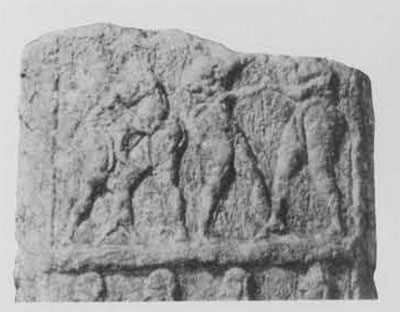
The earliest civilization to leave clear, repeated imagery of wrestling is ancient Sumer in Mesopotamia. Stone carvings show wrestlers using distinct grips, stances, and sequences of movement. The level of detail suggests that wrestling had already become a formalized activity, not just spontaneous fighting.
The famous story of Gilgamesh also includes a dramatic wrestling encounter, reinforcing the idea that grappling competitions held cultural significance.
Ancient Egypt’s technical sequences
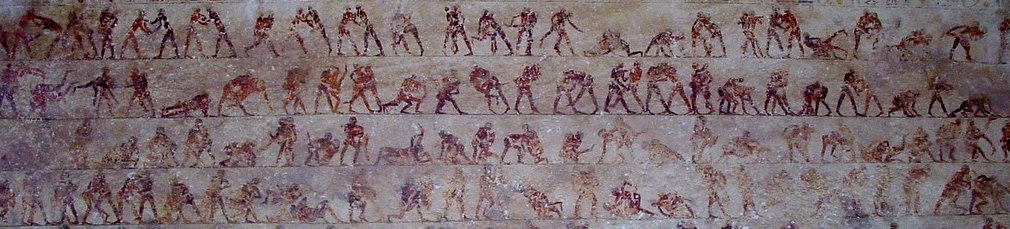
In the tombs of Beni Hasan, Egyptian artists painted hundreds of wrestling pairs in fluid, step-by-step sequences. Many archaeologists interpret these as demonstrations of techniques or as scenes from organized matches. The wrestlers display counters, throws, and holds that look systematically taught and practiced—another strong sign of an established sport.
Greece and the birth of rule-based competition
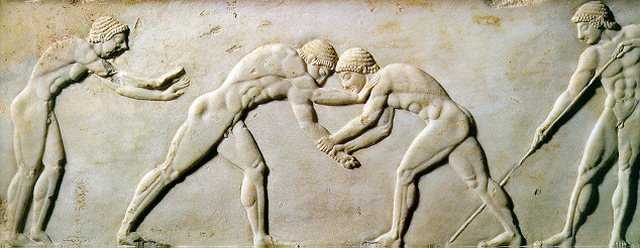
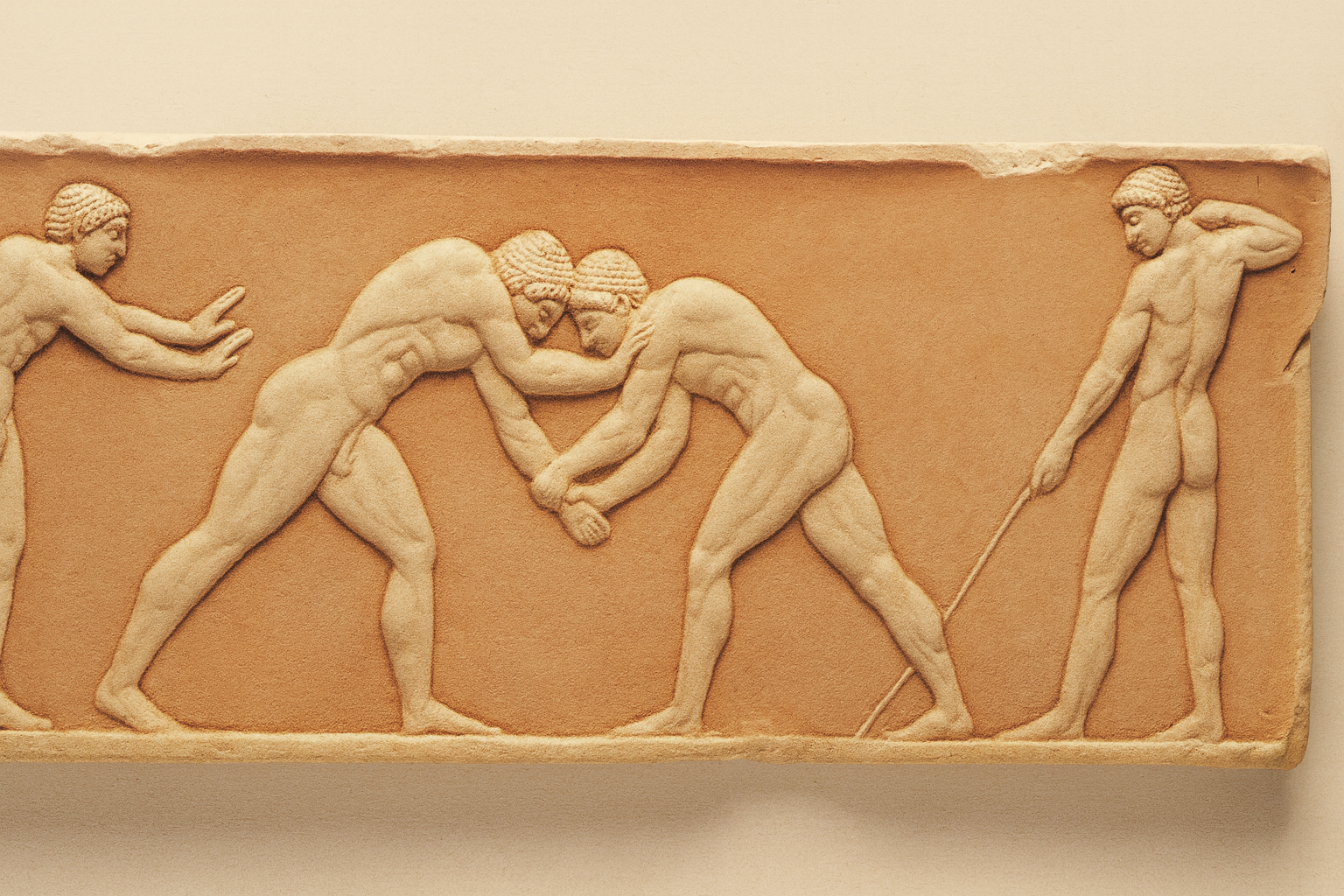
By ancient Greek times, wrestling is unquestionably a full-fledged sport with rules, referees, and dedicated champions. It entered the ancient Olympic Games in 708 BCE and became one of the core events. Victory conditions were defined, techniques were taught, and skill—not just brute strength—was rewarded.
The Greeks also elevated wrestlers to celebrity status, documenting their training, careers, and victories. This is one of the earliest examples of athletes recognized as public figures.
But Isn’t Running Older?
Physically? Almost certainly yes. Humans have run for survival and competition since long before recorded history.
But “oldest activity” and “oldest sport” are not the same thing.
Running leaves very little archaeological evidence. We know early humans must have raced, but there are no clear prehistoric depictions of formal footraces, nor do we see early rule sets for racing contests until much later. Running becomes well-documented during ancient festivals and early Games, but that is after wrestling already appears as an organized activity in multiple civilizations.
So while running is probably as old as humanity itself, wrestling is the oldest sport with clear, on-record evidence.
Other Ancient Sports Worth Mentioning
While wrestling leads in documentation, several other sports appear extremely early in human history:
- Archery competitions – developed from hunting and later ritualized in many cultures.
- Boxing – seen in ancient Mesopotamian and Egyptian art, then formalized in Greece.
- Throwing sports – such as javelin and discus, which evolved from practical skills.
- Swimming – found in prehistoric art, though not clearly as competition until later.
All of them reflect the same pattern: early survival skills eventually transformed into organized contests.
Why Wrestling Has the Strongest Claim
A few key reasons explain why most historians and museums classify wrestling as the oldest sport:
- It requires no equipment
Two competitors and a shared understanding of “who wins” are enough. - It leaves recognizable evidence
Grappling poses are easy to identify in artwork, unlike early running scenes which often look ambiguous. - It appears across unrelated cultures
From Sumer to Egypt, Greece, India, and Japan, wrestling shows up independently. This suggests that grappling was a natural form of competitive play across humanity. - It was formalized early
By the Bronze Age, wrestling already shows signs of rules, techniques, and spectators—hallmarks of organized sport.
So… What Is the Oldest Sport in the World?
The most precise and historically supported answer is:
The oldest clearly documented organized sport in human history is wrestling.
While running and other basic contests likely existed informally even earlier, wrestling is the first sport for which we have:
- recognizable depictions of technique,
- signs of structure,
- cultural significance,
- and later, written rules.
So the next time someone asks “What’s the oldest sport in the world?”, you can give them a confident, nuanced answer:
Humans have probably competed in many ways since prehistory, but wrestling is the oldest sport with solid, traceable evidence across civilizations.