Hidden in the serene town of Spilimbergo lies one of the most distinctive art institutions in the world — a place where craftsmanship, history, and quiet devotion come together in spectacular form. Italy may be famous for its Renaissance painters and ancient sculptures, but this tucked-away school offers something rarer: a living sanctuary dedicated entirely to the mosaic arts.
A First Impression of Silence and Stone
Walking the corridors of the Scuola dei Mosaicisti del Friuli on a Friday morning, the first sensation that struck me wasn’t the hum of activity but the silence. I expected chatter, the shuffle of feet, maybe the murmur of students and teachers at work. Instead, the school was hushed, interrupted only by the crisp tap of a hammer or the soft click of tiles shifting into place.
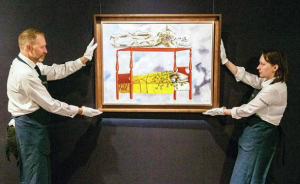
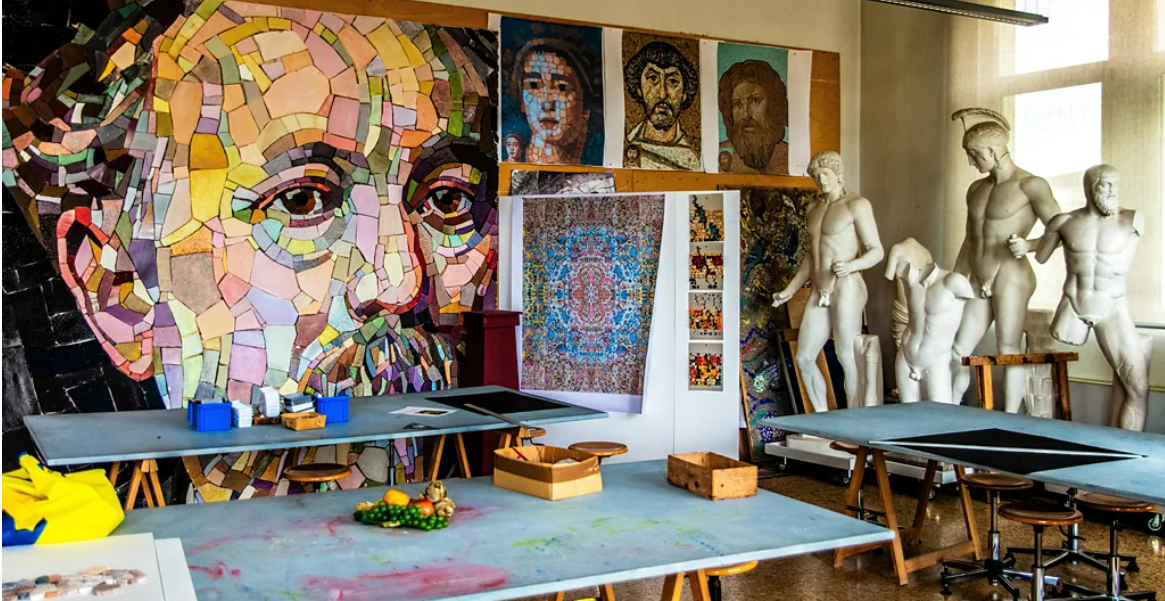
Then came the mosaics. They were everywhere — in the courtyard, where a full-scale tessellated version of Picasso’s Guernica welcomes visitors; in long hallways lined with reproductions like Michelangelo’s Pietà and the Virgin and Child from Hagia Sophia. Mosaics climbed across walls, curled around corners, and transformed the entire building into a living museum of texture and pattern.
Inside the classrooms, students hunched over their workstations with intense focus, their fingers guiding tiny fragments into place. I quickly understood that mosaic-making is not simply a skill — it’s a discipline that thrives in quiet, patient concentration.
A Century of Preserving an Ancient Craft
Founded in 1922, the school was created to formalize the training of local artisans and preserve a mosaic tradition dating back to the Roman Empire. Spilimbergo — a town of medieval lanes, Renaissance palaces, and a stately castle — became the perfect home for such a heritage.
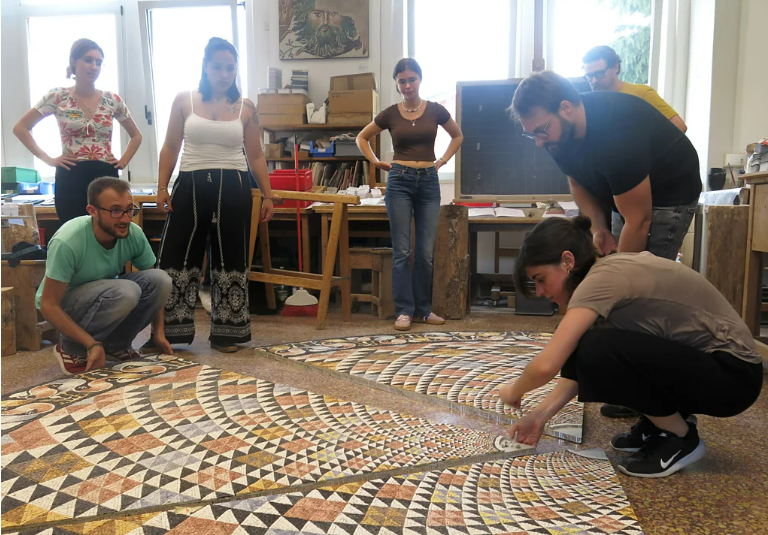
Today, a century later, the school stands as the only academic institution in the world devoted entirely to the mosaic arts. Students of all ages arrive from across the globe to embark on its rigorous three-year programme, learning everything from complex Greco-Roman techniques to shimmering Byzantine compositions before moving on to contemporary, experimental styles.
This unique identity has turned the school itself into a destination. Around 40,000 visitors tour the campus each year, making it one of Friuli’s most visited sites. Many come on public tours; others book private visits to see the workshops up close.
How Mosaics Are Mastered — and Who Masters Them
Although roughly 40 students are admitted annually, fewer than 15 complete all three years and earn the title maestri mosaicisti — mosaic masters. Only six are selected for a prestigious fourth year, a kind of master’s-level immersion.
“It takes a lot of hard work and discipline to become a maestro mosaicista,” said director Gian Piero Brovedani. “This is an art that’s both humbling and exacting. It teaches you to slow down, pay attention and find beauty in repetition.”
Mosaic-making is indeed a meticulous craft. Artists place hundreds — sometimes thousands — of tiny tesserae, some as small as 0.5cm, made from marble, glass, smalto, or even shells. Precision is essential, and so is intuition: the handmade tiles must form a coherent rhythm when seen as a whole.
Brovedani notes that mosaic work is also inherently collaborative. While artists often work individually on sections, the real magic emerges only when the pieces unite.
“It’s a craft that asks you to ‘erase’ yourself, in a way,” said third-year teacher Cristina de Leoni. “One tile on its own doesn’t say very much, but together with others, it creates an artwork. There’s no ego in mosaic-making.”
A Craft That Spans Civilizations
Mosaics date back to Mesopotamia in the 3rd millennium BCE, spreading across cultures from the Greeks and Maya to the Byzantine and Islamic worlds. Unlike other art forms that champion individual genius, mosaics have always been a collective effort — expressive yet anonymous.
Friuli-Venezia Giulia played an especially important role in the craft’s survival. With stone from the Tagliamento River and strong cultural ties to Venice, the region became a mosaic stronghold even as the art faded post-Renaissance. In the 19th Century, Friulian mosaicist Gian Domenico Facchina revolutionised the craft with the rovescio su carta (reverse on paper) method, enabling panels to be assembled off-site. The technique debuted famously in the Opéra Garnier in Paris.
Since then, mosaicists trained in Spilimbergo have contributed to works worldwide — from Rome’s Foro Italico to New York’s World Trade Center subway station, from Jerusalem’s Church of the Holy Sepulchre to modern galleries in Tokyo.
The Students Who Shape the Future of the Art
“The duality of mosaics makes them endlessly fascinating,” said student Purnima Allinger, who left a marketing career in Berlin to pursue the craft. “It’s a precise and meditative-like craft, but also expressive and emotional like art. You’re always shifting between the two – it keeps you completely engaged.”
Swiss maestro Amos Carcano, one of the school’s standout alumni, echoes this sentiment. “You work with your hands, but you’re also constantly inventing, playing with texture, colour and patterns. Contemporary mosaics push those boundaries even further. It’s a tradition, but it’s also wide open.”
Carcano is one of ten alumni currently creating a monumental 1,265-sq-m mosaic floor for the school’s courtyard, depicting native Friulian flora and fauna — a project that will take over a year to complete.
And those countless mosaics lining the school’s corridors? They’re all created by students, past and present.
“We think of the school as a bottega – a workshop,” says mosaic history teacher Danila Venuto. “And in a workshop, you learn by doing. It’s only natural that the students are put to work as soon as they start learning the ABC of mosaic. This is a craft that’s mastered and kept alive through making.”
A Destination for Travellers, Not Just Artists
Visitors can get involved through corsi brevi — short, hands-on courses lasting four days to a week. Tours grant access to more than 800 mosaic works and active classrooms where students and masters collaborate.
Guided visits are led by one of the school’s 79 certified guides or by local volunteer guides from Spilimbergo, often pairing the tour with a walk through the town’s historic centre.
And the mosaic experience extends far beyond the school’s walls. Spilimbergo is filled with mosaics — decorating the Roman-Gothic Duomo, lining restaurants and shopfronts, tucked into alleyways, and showcased in galleries along Corso Roma, where alumni sell their creations.
Nearby, visitors can explore the Fabbrica di Mosaici Mario Donà, a historic kiln relocated from Murano to Spilimbergo, where the coloured enamels used in mosaics are still produced by hand.
Where Nature Meets Craft: The Landscape Behind the Art
A short drive away lies the Tagliamento River, whose smooth, water-shaped stones have provided mosaic materials for centuries. The surrounding Magredi — a stark, gravelly plain shaped by local streams — hosts a surprising variety of wildlife, from wildflowers to birds of prey. These landscapes, often rugged yet full of life, inspire countless works produced in the school.
“People from Spilimbergo – and from Friuli at large – are very proud of this centuries-old tradition,” Venuto explains. “Mosaic-making is part of our cultural DNA, a true Friulian legacy.”
A Tradition That Welcomes the Curious
In Spilimbergo, mosaic-making isn’t merely preserved — it’s practiced, shared, and enthusiastically passed on. The school’s open-door spirit invites travelers, artists, dreamers, and anyone curious to discover the power of placing small pieces together to form something greater.
Here, mosaics aren’t just art; they are continuity, collaboration, and culture — and every visitor is welcome to become part of the story.