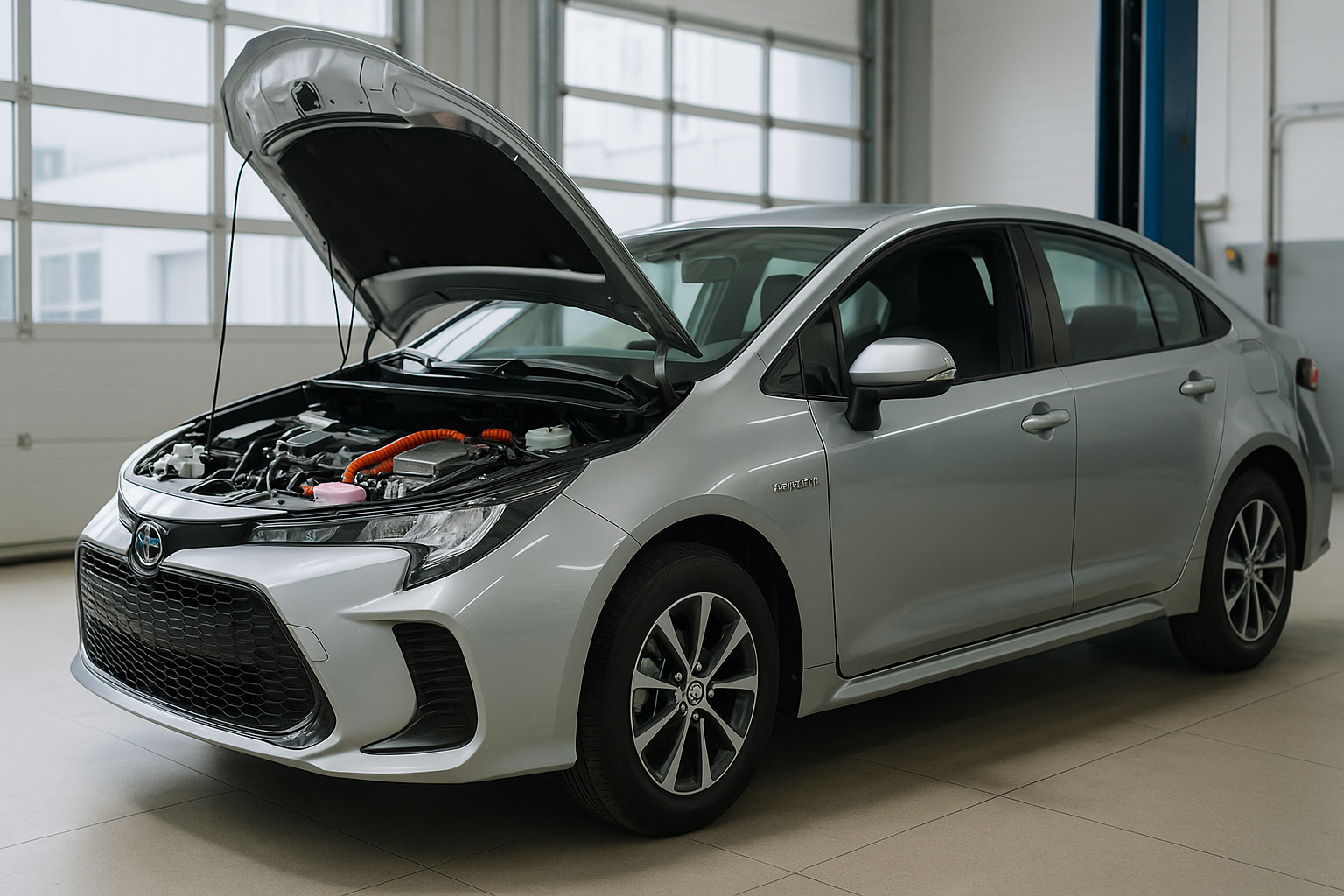
A Familiar Sight, But Still a Mystery
If you’ve been on the road lately, chances are you’ve seen a Toyota Prius glide by almost silently, or maybe a sleek new SUV with a “hybrid” badge on the back. These cars have been around for years, yet many people still wonder: how do hybrid cars actually work? They look just like any other car, but under the hood, things are a little different. And the bigger question for most drivers is—are they worth buying?
The Word “Hybrid” Explained Simply
The name says it all: a hybrid combines two different systems. In this case, a regular gasoline engine and an electric motor powered by a battery. Instead of depending on just one of them, the car’s onboard computer decides which one to use, or whether to use both together.
Think of it as teamwork. The gas engine is great for long stretches and higher speeds, while the electric motor takes care of quieter, low-speed driving or gives a little push when you need extra power. The whole point is to squeeze more distance out of every drop of fuel.
What Happens When You Actually Drive One
Let’s say you start your car in the morning. Many hybrids fire up silently because the electric motor takes the lead. Around town, when you’re crawling through traffic or just going to the store, you might run almost entirely on battery power. That’s why hybrids feel so quiet compared to normal cars.
Step harder on the accelerator or hit the highway, and the gasoline engine joins in. Sometimes both the engine and the motor work together, especially when you need quick acceleration, like merging onto a busy road.
Then comes the clever bit: braking. Normally, when you slow down in a car, all that energy is wasted as heat. Hybrids flip the script. They use regenerative braking, which captures some of that energy and feeds it back into the battery. It’s like recycling, but for motion.
Not All Hybrids Are the Same
There’s more than one flavor of hybrid out there:
- Standard hybrids (HEVs): The kind most people think of, like the Prius. You never have to plug them in—the battery recharges as you drive.
- Plug-in hybrids (PHEVs): These come with bigger batteries. You can charge them at home or at a public station and drive short trips (often 30–50 km) without using gas at all.
- Mild hybrids: A simpler version where the electric motor doesn’t drive the car alone but helps the engine save fuel.
Each type has pros and cons. Plug-ins let you drive more on electricity but cost more upfront, while standard hybrids are often the most practical and hassle-free.
Why People Love Them
The obvious win is fuel economy. Some hybrids manage 40–60 miles per gallon (around 4–6 liters per 100 km), which means far fewer trips to the gas station. If you’ve been shocked by rising fuel prices, that alone can make a big difference.
There’s also the environmental side. Since they use less fuel, they produce fewer emissions. You won’t singlehandedly save the planet by driving a hybrid, but you’ll be polluting less compared to a gas-only car.
Maintenance is often easier than people expect. Apart from standard services like oil changes, hybrids benefit from regenerative braking, which reduces wear on brake pads. And while the battery is the most expensive part, most carmakers cover it with long warranties—often 8 to 10 years.
But They’re Not Perfect
Of course, hybrids have trade-offs. They usually cost more to buy than their gasoline-only counterparts. That extra cost can be offset by fuel savings, but only if you keep the car long enough.
Space can also be an issue. Because of the big battery, some hybrids lose a bit of trunk room. And if you ever need to replace the battery outside of warranty, the price won’t be small. The good news is that modern hybrid batteries last far longer than many skeptics believe.
Should You Take the Leap?
This is where it gets personal. If you spend most of your time driving in the city, a hybrid is a no-brainer. Short trips, stop-and-go traffic, and low speeds are exactly where they shine. You’ll save fuel, enjoy a smoother, quieter ride, and avoid range anxiety since you can always rely on the gas engine.
For long highway commuters, the benefit is still there, but not as dramatic. On steady, high-speed drives, hybrids rely more on the engine, so you won’t see as many savings compared to city driving. In that case, a fuel-efficient diesel or even a fully electric car might be worth comparing.
But for a lot of drivers, hybrids offer the “best of both worlds.” You get lower fuel costs, fewer emissions, and the convenience of not worrying about charging stations.
So, how do hybrid cars work? By blending two power systems—gasoline and electric—into one seamless ride. They’re smart, efficient, and increasingly reliable.
Should you get one? If you value fuel savings, care about emissions, and want a car that’s easy to live with, the answer is yes. Hybrids are no longer experimental—they’re a solid option for everyday driving.
Maybe they won’t replace every type of car out there, but for many people, they’re a comfortable step toward the future of transportation.