When the Nintendo Switch 2 launched on June 5, 2025, Nintendo positioned it not as a radical overhaul, but as a refined evolution—one aimed squarely at enhancing the beloved hybrid gaming format. With its upgraded specs and design tweaks, it delivered a compelling upgrade path. Still, some new compromises and supply issues tempered consumer enthusiasm.
Refined Hardware, Powerful Experience
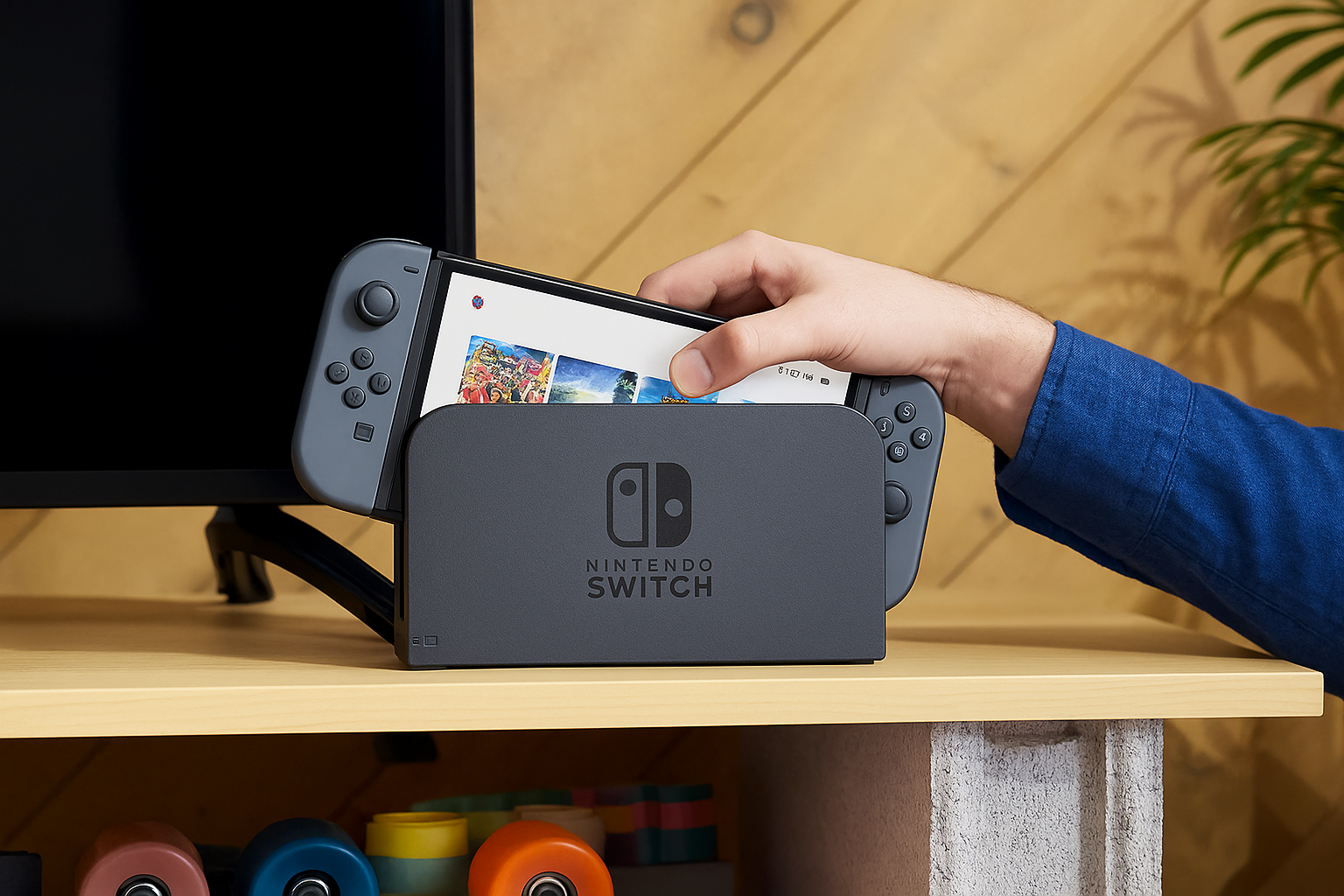
The heart of the upgrade lies in performance. Equipped with a custom Nvidia Tegra “Drake” chip, the Switch 2 supports 4K output in docked mode, 1080p handheld resolution, HDR10, and a 120 Hz refresh rate—a significant leap over the original Switch’s limitations. Inside, a spacious 7.9‑inch LCD screen, ample 256 GB internal storage, and twin USB‑C ports enhance usability.
Reviewers praised the upgraded visual fidelity and fluidity. Many noted the Switch 2 is “not groundbreaking in design, but offers substantial upgrade for existing Switch users.” Hardware performance is strong, though battery life remains a weak point.
Design Tweaks & Controller Improvements
Nintendo refined rather than reinvented the console’s form. The new Joy‑Con 2 controllers magnetically attach, are larger, and feel sturdier—though they still lack the Hall-effect joysticks meant to resolve analog drift issues. Improved haptics, GameChat support, and a refined dock finish the upgrades in feel and usability.
Reviewers highlighted the quality‑of‑life enhancements: smoother UI, better audio, and dual USB‑C ports. Still, they noted the battery life—ranging between 2 to 6.5 hours, usually around 3.5 hours under real‑use—is a drawback.
Massive Demand vs Limited Supply
Demand exploded at launch. Nintendo sold an astounding 3.5 million units in four days, contributing to a sharp surge in stock price and making the Switch 2 the fastest‑selling console in the company’s history. Yet even with adequate initial shipments, restocks have been unpredictable.
In North America, console demand outpaces supply. Retailers such as Walmart, Best Buy, Target, GameStop, and Amazon offer sporadic restocks that vanish within minutes—even seconds—for subscribers. In contrast, UK retailers reported steadier but short-lived availability.
Fans on Reddit corroborate this imbalance: those in metropolitan regions report stock outages, while others saw occasional inventory during peak launch times. Reports also highlight scalpers undermining restocks, listing the console for $700–$800—far above retail.
Performance vs. Practicality
Analysts generally agree this iteration is “an evolution, not a revolution”—enhancing what’s already great, but lacking transformative features. Given its high price—$449.99 standalone, $499.99 bundled with Mario Kart World—some gamers question whether the upgrades justify the cost when PlayStation, Xbox, and PC values have also advanced.
While reviewers applaud the sleek design, magnetic controllers, and robust build, they also acknowledge drawbacks: battery, game library, price, and external storage needs. MicroSD Express cards are quickly becoming essential as large third-party titles—like Cyberpunk 2077 and Hitman—require bigger capacity.
Software & Ecosystem Status
At launch, first-party exclusives are limited to Mario Kart World, Donkey Kong Bananza, and a remastered Bravely Default title. Critics note this modest launch line-up may not offer enough incentive for buyers already invested in Switch 1. Upcoming titles like Metroid Prime 4 remain pivotal in shaping the platform’s future appeal.
Backward compatibility is a highlight: nearly all original Switch games run seamlessly and can even benefit from free quality upgrades or paid “Upgrade Packs.” The addition of GameChat, Mouse Mode, and enhanced Joy‑Con features signal a subtle yet beneficial software progression.
The Nintendo Switch 2 exemplifies Nintendo’s approach to refinement. Hardware-wise, it raises the bar: sharper visuals, smoother performance, and a more satisfying user experience. In practical terms, though, it remains limited by battery constraints, price barriers, and a thin game line-up. Its launch stock issues—though better managed than past console debuts—still leave eager gamers on edge.
Ultimately, if you want a polished version of the original—capable of running current and future games with new social and graphical features—this is it. But if you expect revolutionary change, clearer software support, or long battery stamina, it might be worth waiting.